
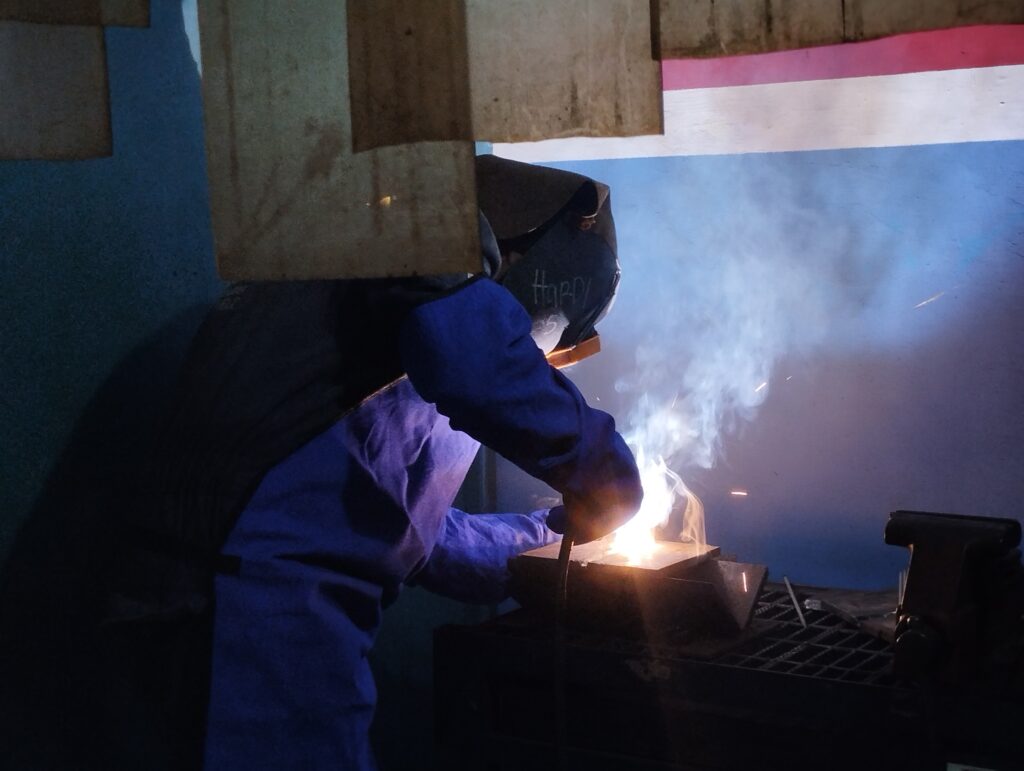
Shipbuilding Industry – The shipbuilding industry holds great potential in Indonesia. However, behind these opportunities lies a gap between labor demand and the availability of competent human resources. This gap becomes even more apparent when the industry’s growth outpaces the supply of skilled workers. This situation underscores that the shipbuilding industry’s vast potential is actually hindered by limitations in human resources.
Rising demand for new ships, increasing needs for ship repairs and modifications, and the growing size of domestic and international fleets are driving the shipbuilding industry to expand rapidly. In this process, the availability of a skilled workforce is a crucial factor; without the support of competent human resources, production and quality targets cannot be met. Some of the most in-demand positions include welders, pipefitters, marine electricians, inspectors, and fitters—core professions that determine the smooth progress of shipbuilding and maintenance, as well as safety standards.
Shipbuilding Industry – The Skills Gap in Indonesia’s
The shipbuilding industry in Indonesia faces a significant skills gap. A shortage of skilled and certified workers often causes projects to be hindered or even delayed. On the other hand, the majority of workers have not yet fully mastered digital technologies such as CAD systems, sensors, and data-driven monitoring. A similar phenomenon is also occurring in the Southeast Asian region. Countries such as Vietnam, the Philippines, and Malaysia are currently stepping up efforts to close the skills gap in the shipbuilding and maritime sectors, particularly regarding workers proficient in digital technology, automation, and international safety standards. This trend is also evident in Indonesia, given many similar challenges, such as a shortage of new job candidates, low interest among the younger generation in this sector, and complex certification requirements.
The article “Navigating Shipbuilding 4.0” (Taylor & Francis, 2025) explains that the shipbuilding industry is currently undergoing a transformation toward greater modernization through the use of digital technology. This transformation is also shifting the skill requirements for the workforce. Workers who previously relied solely on technical skills are now expected to be proficient in digital technology, data analysis, and computer-based production systems. Workers must also begin adapting to evolving company needs in order to meet qualification requirements.
The shipbuilding industry in Indonesia faces a significant skills gap. A shortage of skilled and certified workers often causes projects to be hindered or even delayed. On the other hand, the majority of workers have not yet fully mastered advancements in digital technology, such as CAD systems, sensors, and data-driven monitoring. Global competition is also intensifying, as shipyards in developed countries can offer higher compensation to attract the best talent. Furthermore, occupational safety and health (OSH) remains a critical concern, given that activities in shipyards are inherently high-risk.
To address these challenges, shipyard workers are required to possess a wider range of adaptable skills. Traditional technical skills such as welding, pipefitting, and metal structure assembly remain the primary foundation. However, workers also need to master skills in shipboard electrical systems, quality inspection, and Non-Destructive Testing (NDT). Equally important, digital literacy and an understanding of environmentally friendly technologies are now increasingly in demand. “Digital Twin of Shipbuilding Process in Shipyard 4.0” (MDPI) emphasizes that workers capable of combining manual expertise with digital skills will be more competitive in the future.
To compete in the ever-evolving shipbuilding industry, prospective workers cannot simply wait for opportunities to come their way; they must prepare themselves from the very beginning. The first step is to understand which positions and skills are most in demand by the industry. Next, developing a strong work ethic and awareness of the importance of safety are key assets, as the work culture in shipyards places a strong emphasis on occupational safety and health (OSH). With thorough preparation, workers will be better equipped to face challenges while increasing their chances of success in this field.
Read Also: Implementing Occupational Safety and Health in Companies: Avoiding Workplace Accident Risks
Read Also: Implementing Occupational Safety and Health in Companies: Avoiding the Risk of Workplace Accidents