

Shipyard Workers – In August 2025, results from the National Labor Force Survey (Sakernas) showed that the open unemployment rate in Indonesia stood at 4.85%. This means that approximately five out of every 100 people in the labor force are unemployed (Central Bureau of Statistics, 2025). One of the factors contributing to the rising unemployment rate is the mismatch between the labor supply and industry demand. This mismatch includes a skills gap and a skills mismatch. Of the total 152.11 million labor force members, more than 60% are elementary and junior high school graduates, more than 50% experience a skills mismatch, and 9.98 million fall into the NEET category, highlighting the need to improve competencies to compete in both the national and regional labor markets.
Why Training is Essential for Shipyard Workers
At the same time, the maritime sector, one of the backbones of Indonesia’s economy, with approximately 101,684 vessels in operation—requires a large number of skilled workers, particularly welders, fitters, and specialists in propulsion, mechanical engineering, and electrical systems. To face global competition and the demands of the ASEAN Economic Community (AEC), the workforce must possess relevant, certified technical skills that meet industry needs; thus, training and certification—especially for shipyard workers—are strategic steps to enhance workforce competencies in the maritime industry. Therefore, the series of training and certification programs organized by Eduvokasi as part of PT BKI (Persero)’s TJSL program is designed as a strategic measure to strengthen the competencies of shipyard workers.
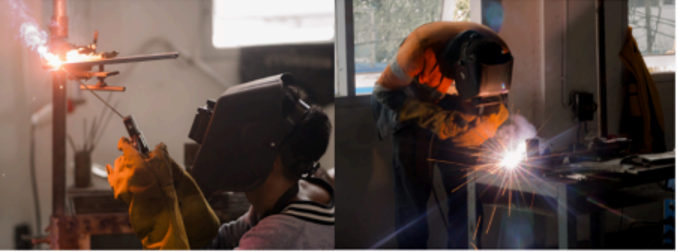
Throughout 2025, this collaboration took the form of three activities. First, a Welding Technician Refresher Training and Certification program at BPVP Sorong on August 28–30, 2025, attended by 15 participants from two shipyards in Sorong. This activity aimed to update participants’ technical knowledge and ensure their skills met maritime industry standards.
Second, an Online Training and Certification Program for General Occupational Safety and Health (K3) Specialists, held from September 24 to October 7, 2025, with 15 participants from 15 shipyards in East Kalimantan. This program was organized in collaboration with the East Kalimantan Branch Executive Board of the Indonesian Shipbuilding and Offshore Facilities Industry Association (DPC IPERINDO) and supported by PT Garuda Systrain Interindo. This training was provided to address the need for a competent workforce in the field of occupational safety and health, which is a crucial aspect in high-risk industries such as shipbuilding.
Third, a Welding Refresher Training course was held in collaboration with the Samarinda Vocational and Productivity Training Center (BPVP) under the Ministry of Manpower. This was followed by a Welder Certification program conducted by BKI, also as part of PT BKI (Persero)’s TJSL program. This series of activities took place from October 20–24, 2025, involving 50 participants from 14 shipbuilding companies in East Kalimantan. The larger scale of this initiative reflects the high demand for certified workers in the East Kalimantan region. This initiative also demonstrates the shipbuilding companies’ commitment to improving the quality standards of welding work, which directly impacts the safety and structural integrity of ship construction.
As part of the commitment to sustainability and impact assessment, six to twelve months after the program’s completion, participants and companies will be contacted again for a Social Return on Investment (SROI) survey. This evaluation is crucial to ensure long-term benefits—both from improved individual competencies and the impact on corporate productivity and the industry as a whole. This collaboration between Eduvokasi and PT BKI (Persero)’s TJSL initiative represents a concrete step toward strengthening the competitiveness of Indonesia’s workforce, improving the quality of the workforce in the maritime industry—particularly in shipbuilding—and supporting the development of an inclusive and sustainable labor sector.
Read also: Implementing K3: Preventing Workplace Accidents