
The coffee industry relies not only on the beans it produces, but also on farmers’ ability to maintain quality, adapt to change, adopt technology, and manage their farms sustainably. Every cup of coffee represents a long process that starts in the field and depends on farmers’ knowledge, skills, and decisions.
Therefore, building a sustainable coffee industry depends on developing coffee farmers’ capacity. This includes not only cultivation techniques but also post-harvest management, market knowledge, entrepreneurial skills, technology use, and the ability to adapt to environmental challenges.
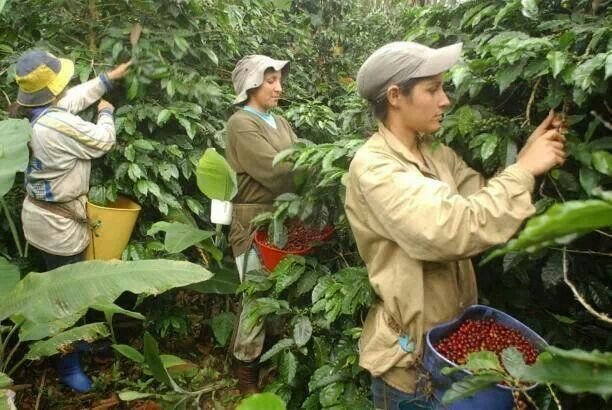
Why Is Farmer Capacity So Important?
Farmers are one of the primary actors in the coffee value chain. The quality and sustainability of production at the The initial stage will shape every step that follows, from processing and trade to the final product. received by consumers.
The International Coffee Organization (ICO) recognizes capacity building as essential to strengthening the coffee value chain. ICO-supported projects include training farmers, promoting sustainable agricultural practices, boosting productivity, and developing the skills needed to meet certification standards.
Capacity building cannot be achieved through a one-off training session. Knowledge and skills must be continually updated as agricultural conditions, technology, market demands, and environmental challenges evolve.
1. Improving Cultivation Knowledge and Skills
A key part of building farmers’ capacity is expanding their knowledge of good, sustainable cultivation practices.
Farmers need to understand how to maintain soil health, manage crops, use inputs appropriately, preserve biodiversity, and anticipate risks that can affect productivity. This knowledge is becoming increasingly vital as climate change presents new challenges to the agricultural sector.
Experience from various coffee development programs shows that knowledge transfer can be a crucial part of the process. The Rainforest Alliance, for example, runs training programs that help farmers understand sustainable farming practices while supporting them in meeting sustainability standards.
One example is the Capacity Building on Inclusive and Sustainable Coffee in Central Sulawesi project. The program aims to train 1,000 farmers in more sustainable agricultural practices, including climate-smart agriculture, climate resilience, and ways to improve rural livelihoods.
2. Enhancing Post-Harvest and Processing Capabilities
Coffee quality is shaped not only by how the plants grow in the field, but also by the post-harvest stage, which plays a crucial role in the final product.
Understanding harvesting, sorting, fermentation, drying, storage, and processing helps farmers produce goods that better meet market standards and demand.
The need to build capacity in this field was also evident in the post-harvest technology and coffee-processing training conducted in Ponorogo Regency in 2026. These activities addressed a significant barrier to improving coffee quality: limited knowledge of post-harvest technology and innovation.
This means that capacity development does not always have to take the form of training on cultivation methods. Post-harvest and processing technologies also need to be part of the farmers’ learning process so that product value can be increased.
3. Developing Farmers’ Entrepreneurial Capacity
Coffee farmers are more than just producers of raw materials. In an ever-evolving coffee ecosystem, farmers also need the ability to identify economic opportunities from the products they produce.
Research on small-scale coffee farmers in East Java shows that their entrepreneurial capacity is shaped by several factors: farmer characteristics, government extension support, the role of private extension agents, and environmental support.
The research also shows that increasing entrepreneurial capacity can help farmers optimize product value-added. Thus, capacity development can focus not only on boosting productivity but also on helping farmers understand business opportunities, innovation, and value-added development.
This matters even more when farmers can access market information and wider business networks.
Empowered Farmers, Sustainable Coffee Industry
The coffee industry can only be sustainable if its farmers’ livelihoods are sustainable, too.
With the right knowledge, skills, access to technology, business management capabilities, and support from their surrounding ecosystem, farmers are better positioned to improve production quality and adapt to changes in the coffee sector.
Capacity building for farmers is more than an investment in human resources; it is a long-term investment in the coffee value chain as a whole.
A sustainable coffee industry requires more than high production. It depends on farmers who can continue to thrive, mutually supportive ecosystems, and collaboration among stakeholders to ensure coffee is produced with quality and responsibility, benefiting communities throughout the value chain.
Because sustainable coffee starts with empowering its farmers.
Read also: What Is TJSL? Definition and 4 Examples of Corporate TJSL Programs
Pingback: Differences Between TJSL and CSR: Definitions & Key Benefits